 SleepBit
How to Compare Lifestyle Experiments Properly
Change one thing at a time and compare several nights under similar conditions.
When testing side sleeping, less alcohol or nasal care, changing several things at once makes the result hard to interpret. Snoring also varies naturally from night to night.
What the evidence says
Consumer sleep technology can organize patterns around a lifestyle change, but it does not replace clinical testing. A personal experiment is more interpretable when it changes one variable, keeps measurement conditions stable and compares several nights.
What to do
Record a 5–7 night baseline, change one factor, then record another 5–7 nights. Keep sleep opportunity, phone placement and room setup similar, and track sleepiness and sleep quality as well as snoring.
Use caution
Do not conclude from one best or worst night. Witnessed apnea or severe sleepiness takes priority over continued self-experimentation.
Put the reasoning together
Across seven nights, a median can be more useful than a mean when one unusual night dominates. What matters most is choosing the comparison rule before seeing the result.
A common misconception
Myth: an improved average proves causation. A personal experiment strengthens a hypothesis but cannot eliminate chance or confounding.
How to use this information
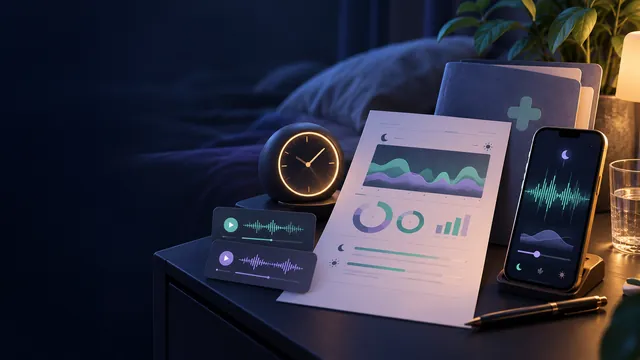
Recording quality comes from comparability, not volume. Keep phone placement, power state and room setup as stable as practical and tag changes. Compare a multi-night tendency instead of the highest or lowest night, and keep sound metrics separate from sleepiness and perceived sleep quality.
Next-step checklist
- Use separate baseline and intervention periods
- Change one variable at a time
- Compare sound, symptoms and sleep time
Bottom line
A personal experiment builds a better hypothesis; it does not prove a diagnosis. Stop experimenting and seek care when warning signs appear.
SleepBit records can make a clinical conversation more precise. Diagnosis and treatment changes should be decided with a clinician.