 SleepBit
Why Bed-Partner Observations Matter
Pauses, gasps and body position are clinical clues a microphone can miss.
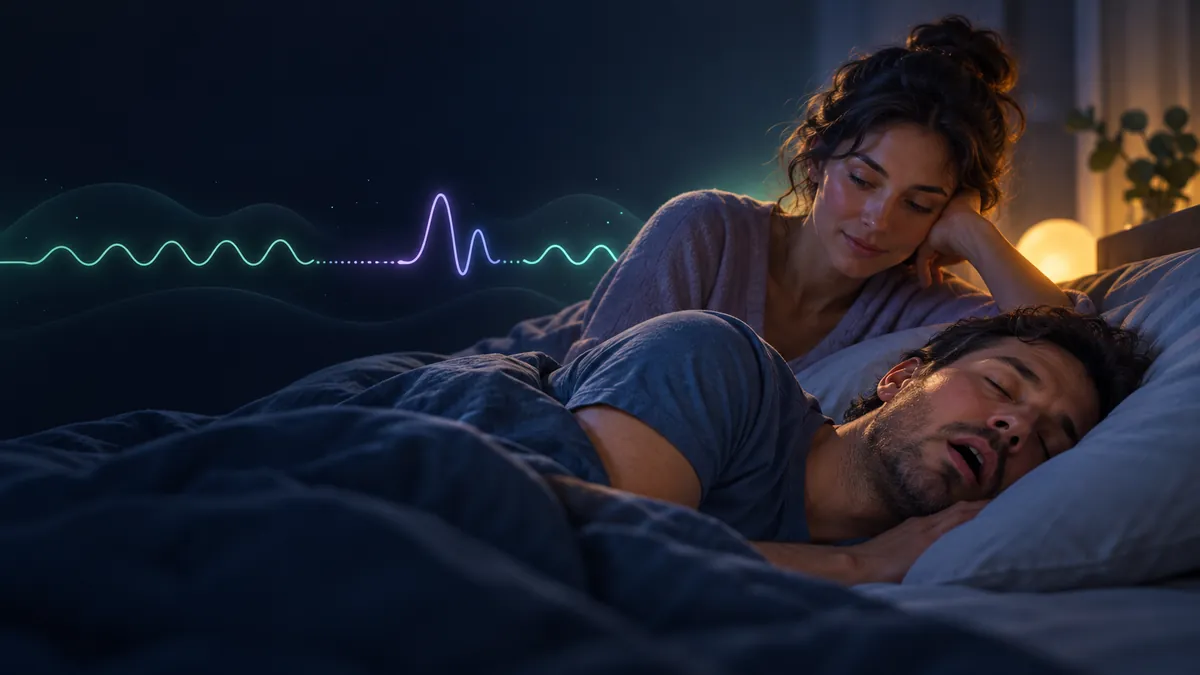
A sleeping person often does not remember pauses or recovery gasps. A bed partner can observe breathing pattern and body position, not just loudness.
What the evidence says
Witnessed apnea is a key OSA history item, but observation alone is not diagnostic. Quiet events or different sleep schedules can also lead to missed episodes.
What to do
Note approximate duration, gasping, movement, color change and whether events were worse on the back. With consent, a short video may help the clinician.
Use caution
A partner should not stay awake to monitor all night. Blue color, severe breathing difficulty or inability to wake the person requires emergency action.
Put the reasoning together
“Quiet for about 20 seconds, then a loud gasp while on the back” is more useful than “snored a lot.” Approximate timing, pattern and position are enough.
A common misconception
Myth: a partner must time events precisely. Approximate duration, repetition, position and recovery gasps are clinically useful.
How to use this information
Recording quality comes from comparability, not volume. Keep phone placement, power state, app version and room setup as stable as practical, and tag changes. Compare a multi-night tendency rather than the highest or lowest night, and keep sound metrics separate from sleepiness and perceived sleep quality. The record should generate better clinical questions, not a diagnosis.
Next-step checklist
- Observe breathing pattern, not volume alone
- Note position, gasping and color change
- Keep brief video only with consent
Bottom line
A partner’s observation is valuable evidence, not a duty to monitor all night. Capture the pattern and hand it to clinical evaluation.
SleepBit records can make a clinical conversation more precise. Diagnosis and treatment changes should be decided with a clinician.