 SleepBit
Who May Benefit From an Oral Appliance for Snoring?
A custom mandibular advancement device works best with proper assessment and dental follow-up.
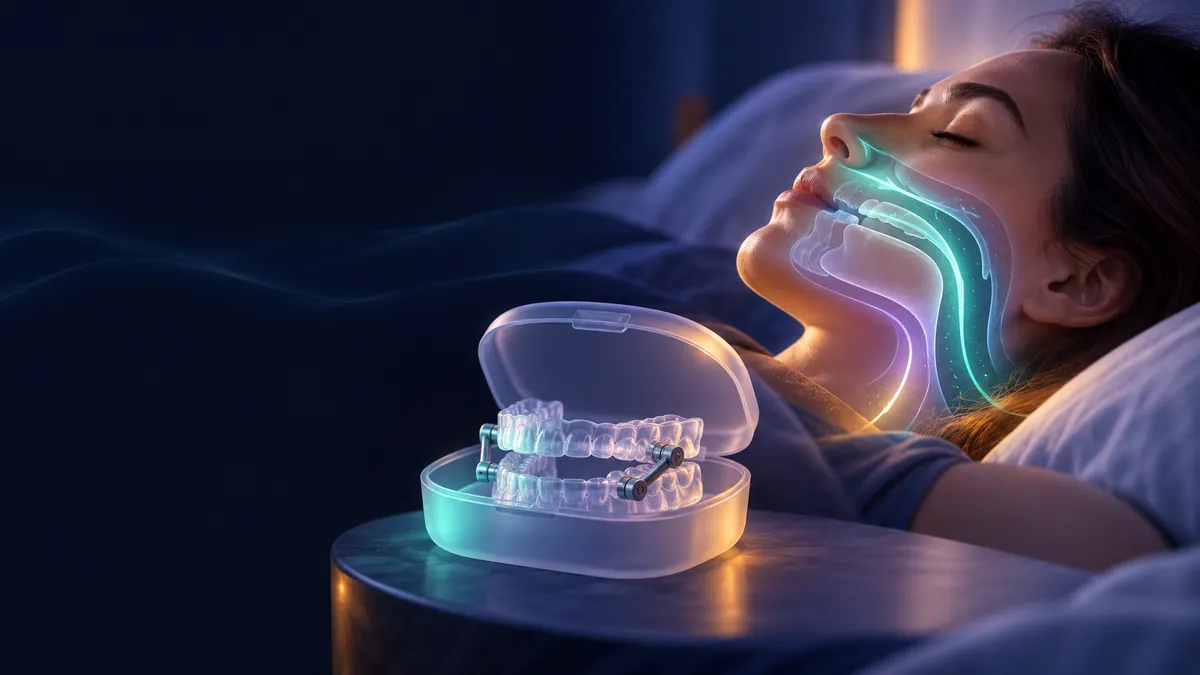
Oral appliances hold the lower jaw and tongue forward to enlarge the upper airway during sleep. They may help primary snoring and selected mild-to-moderate OSA, but an online boil-and-bite product is not equivalent to a clinically fitted device.
What does the evidence say?
Guidelines recommend ruling out sleep apnea before treating primary snoring and favor a custom, titratable appliance managed by a qualified dentist. It is also an option for selected OSA patients who cannot tolerate CPAP or prefer an alternative.
What to check in practice
Have the jaw joints, teeth, gums and dental support assessed. After fitting, confirm benefit with symptoms and, when indicated, objective sleep testing—not sound alone.
A point of caution
Jaw discomfort, salivation changes and long-term bite changes can occur. Persistent pain or tooth movement calls for adjustment, not simply pushing through.
Put the reasoning together
Candidacy depends on more than snoring: OSA status, jaw joints, dental health, protrusive range and long-term follow-up all matter.
A common misconception
Myth: an online device is equivalent to a custom appliance. Adjustment, retention, bite monitoring and adverse-effect management differ substantially.
How to use this information
Define success before treatment: quieter sound, better daytime function, fewer witnessed pauses, objective control, or a combination. Do not conclude from the first uncomfortable nights or one unusually good score. Allow an adaptation period and compare several nights. If adverse effects appear, look for adjustable causes before abandoning therapy, and do not stop prescribed treatment without reassessment.
Next-step checklist
- Distinguish primary snoring from OSA
- Confirm a custom titratable device
- Monitor benefit and bite changes
Bottom line
An oral appliance is a managed therapy, not a buy-and-forget product. Its value depends on selection, adjustment and verification.
SleepBit records can make a clinical conversation more precise. Diagnosis and treatment changes should be decided with a clinician.