 SleepBit
How Do Clinicians Evaluate Snoring?
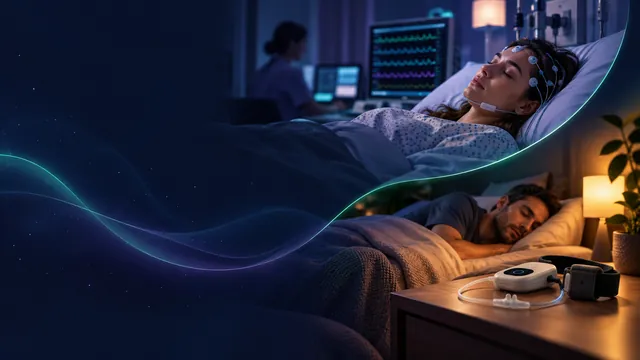
Evaluation starts with symptoms and risk, then measures breathing when a sleep study is indicated.

A clinician does not diagnose the cause from snoring sound alone. The visit usually covers frequency, witnessed pauses, daytime sleepiness, blood pressure and medicines, followed by an examination of the nose, mouth, jaw and neck.
What does the evidence say?
AASM recommends objective testing after a comprehensive sleep evaluation when obstructive sleep apnea is suspected. Depending on the person and comorbidities, that may be in-lab polysomnography or a technically adequate home sleep apnea test.
What to do next
Before the visit, keep one to two weeks of notes on snoring, sleep time, alcohol, nasal blockage and daytime sleepiness. Add any witnessed pauses or gasps reported by a bed partner.
Interpret with care
Phone recordings and questionnaires can support the history but are not a diagnosis. Do not delay evaluation to collect more data if there are repeated breathing pauses or sleepiness while driving.
Put the reasoning together
Sound is only the starting point. Clinicians prioritize breathing pauses, impaired daytime function and medical history that changes the choice of test.
A common misconception
Myth: louder sound always means more severe disease. Severity depends on breathing events, oxygen, sleep disruption and daytime impact.
How to use this information
While preparing for testing, keep usual routines and record sleep time, position, alcohol, congestion and medicines. The goal is not to manufacture a “good” result but to capture a representative night. When results arrive, review signal quality, what was measured and why the recommended next step follows. Do not postpone care merely to complete a diary when warning signs are already clear.
Next-step checklist
- Summarize two weeks of symptoms and sleep time
- Mark witnessed pauses or gasps separately
- Ask what the test should answer and what follows
Bottom line
The useful conclusion is not whether snoring is loud. It is whether symptoms, risk and objective testing point to clinically important airway obstruction.
SleepBit records can make a clinical conversation more precise. Diagnosis and treatment changes should be decided with a clinician.